
Our business is guiding visitors to yours
Call 061 338 588
Ireland’s sharpest retailers have sophisticated apps, websites, loyalty programmes and more customer data than almost any other sector. Printed catalogues, brochures and leaflets are a key part of how they sell. There are useful lessons here for tourism.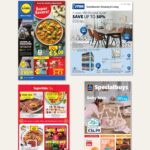
Lidl, Aldi, Tesco, SuperValu and Dunnes know a great deal about selling. They know what customers buy, when they buy it, which promotions work, and how a product performs from one store and one week to the next. They have sophisticated digital marketing and data analytics at their disposal, and they use it well. Every one of them makes print a key part of the marketing mix.
JYSK, Harvey Norman, EZ Living, Woodie’s, DID Electrical and Boots do the same in their own categories. Across grocery, furniture, homeware, DIY, electrical and pharmacy — printed catalogues and leaflets are built into the trading calendar and budgeted a year ahead.
That consistency is the interesting part. These are among the most closely measured marketers in the country. Every channel is costed and every euro is attributed. Print gets its share of that budget because it returns results they can see.
Tourism sells something most retailers would envy: an experience the customer is already looking forward to. Everything retail knows about print transfers directly to tourism.
Browse a supermarket brochure or a furniture catalogue and you will notice things you had not been thinking about. You didn’t search for them. The retailer put them in front of you and created the opportunity for interest.
Tourism has the same challenge. Search engines, websites and AI work well when a visitor already has a question. But visitors cannot search for an attraction, activity or experience they do not know exists. Print introduces the possibility.
“Visitor research shows how much that matters: 95% of visitor brochure users discovered a place, attraction or service they had previously been unaware of.
Discovery is only half the job. Many of the products in a retail brochure are already familiar — the brands are household names and the customer has bought them before. Retailers promote them anyway, because being known is not the same as being top of mind at the moment of choice. 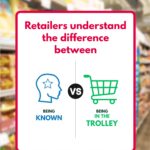
The same holds in tourism. A well-known attraction may have excellent awareness, but visitors have limited time and plenty of alternatives. Knowing an attraction exists does not secure it a place in the itinerary. A brochure brings it back to mind, gives a fresh reason to visit, and turns “we know about that” into “we should do that tomorrow”.
Retailers understand the difference between being known and being chosen.
Retailers place brochures deliberately: at the entrance, at the exit, at the till. That placement gives them a job. A customer picks one up on the way in and acts immediately, or takes one on the way out and is already thinking about the next visit and what’s on offer. The seasonal catalogue lands ahead of the season it sells — garden furniture before the warmer weather is anticipated. In grocery the festive catalogue is the biggest print event of the year, landing weeks before the first Christmas order is placed, with Easter the next largest behind it.
The brochures are not simply describing products. They are shaping the next decision.
Tourism can use print in exactly the same way. A brochure display in a hotel, airport, attraction or visitor centre reaches people while they are already travelling and deciding how to use the next few hours or days. There are few more valuable moments to reach a visitor.
“Hotel Hospitality research supports the point: 96% of respondents at hotels offering printed visitor information say it influences where guests choose to go.
Retailers do not simply await the list a customer arrives with. Their marketing adds to it. The extra item or two in the basket is a big part of the exercise.
Tourism marketing does the same thing, and the numbers are striking.
“Among brochure users, 93% were influenced to visit a specific place, and 65% changed their itinerary because of something they read in print.
For a lesser-known attraction, that means getting onto the list for the first time. For a well-known one, it means moving further up it.
Print helps people picture themselves using or experiencing something, and the Harvard Business Review put that to the test with an online retailer that had no physical stores. It split its customers into two groups: one received the retailer’s weekly email, the other received the same email plus a printed catalogue. The photographs and product descriptions were identical in both. The catalogue group bought 15% more than the email-only group, and found it far easier to imagine themselves wearing the product. Set against the cost of printing and posting it, the catalogue returned six times what it cost. The effect was strongest for purchases made for pleasure rather than utility.
Tourism is that category almost by definition. A visitor is buying an experience they expect to remember, and print is well made for helping them picture it in advance.
No serious retailer expects one channel to do everything. Print sits alongside websites, apps, email, advertising, loyalty programmes, social media and the store itself, and each
 does something the others do less well.
Tourism works the same way. A brochure creates the discovery or provides the reminder. A website adds the detail. Maps give directions. Reviews give reassurance. AI answers the question. Online booking completes the sale.
“Visitor behaviour reflects this: 89% of brochure users went online to search while reading, or immediately after reading, something in print.
That figure is worth reflecting on. When a visitor searches for an attraction online, something prompted the search. Often enough, it was print.
The lesson from Ireland’s sharpest retailers is not that they use print. It is that they use it with a clear purpose, and they keep using it because they can see what it returns.
Print introduces something new. It brings something familiar back to mind. It signals what is available now and what is coming next. It shapes the shortlist, prompts the next action, and sends people to digital already interested.
For a tourism business, the principle is identical. For an unfamiliar attraction or experience, print drives discovery. For a well-known one, it keeps the business top of mind at the moment visitors are deciding how to spend their time.
Awareness gets you into the visitor’s memory. Staying top of mind gets you into their plans.
______________________________________________________________________________________________________________________________________
SOURCES
Brochure and visitor statistics are drawn from Visitor International tourism surveys undertaken during 2025 and 2026. The catalogue field experiment is reported by Jonathan Z. Zhang in the Harvard Business Review, February 2020. Observations on retail practice are our own.
Glance Visitor Media · Info@Glance.ie · 061 338 588 · YourDailyAdventure.com

Watch out for them on your travels!