
Our business is guiding visitors to yours
Call 061 338 588
Marketing messages are everywhere. But how many are actually noticed?
Advertisements are skipped, swiped past, blocked, muted, fast-forwarded or simply lost among countless competing messages.
Even when advertising reaches precisely the right audience, there’s no guarantee it will be noticed, remembered or acted upon.
How did reaching people become so complicated?
For centuries, paper was the great carrier of information. Newspapers, magazines, posters and printed notices connected businesses with audiences.
Then came radio and television.
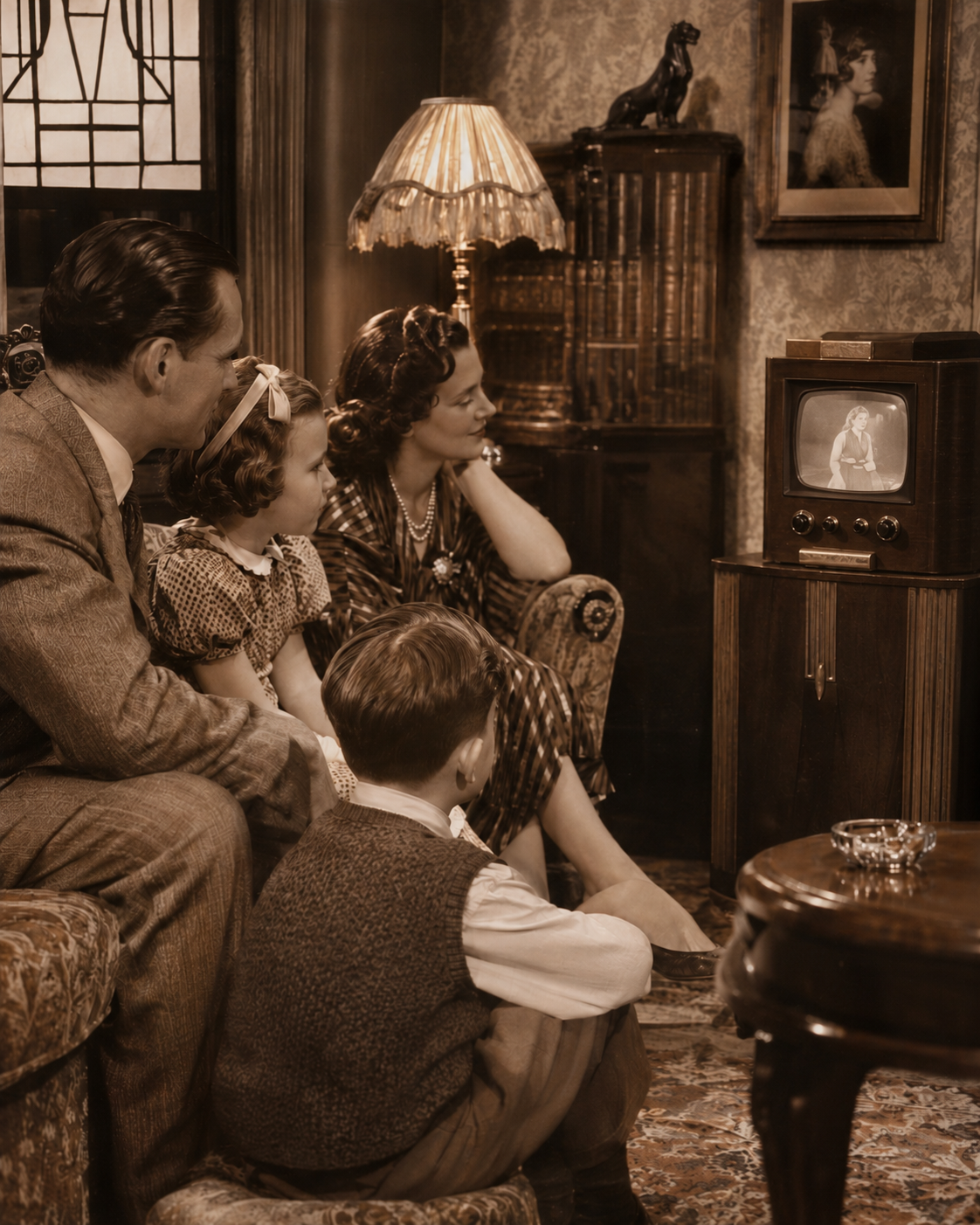
By the 1950s and 1960s, families gathered around televisions offering relatively few channels. Newspapers had loyal readers, radio commanded substantial audiences, and advertising could reach millions through a handful of outlets.
Of course, people could always turn the page, change the channel or make a cup of tea during the commercial break.
But audiences were easier to find, and there were far fewer places for their attention to go.
Then everything began to change.
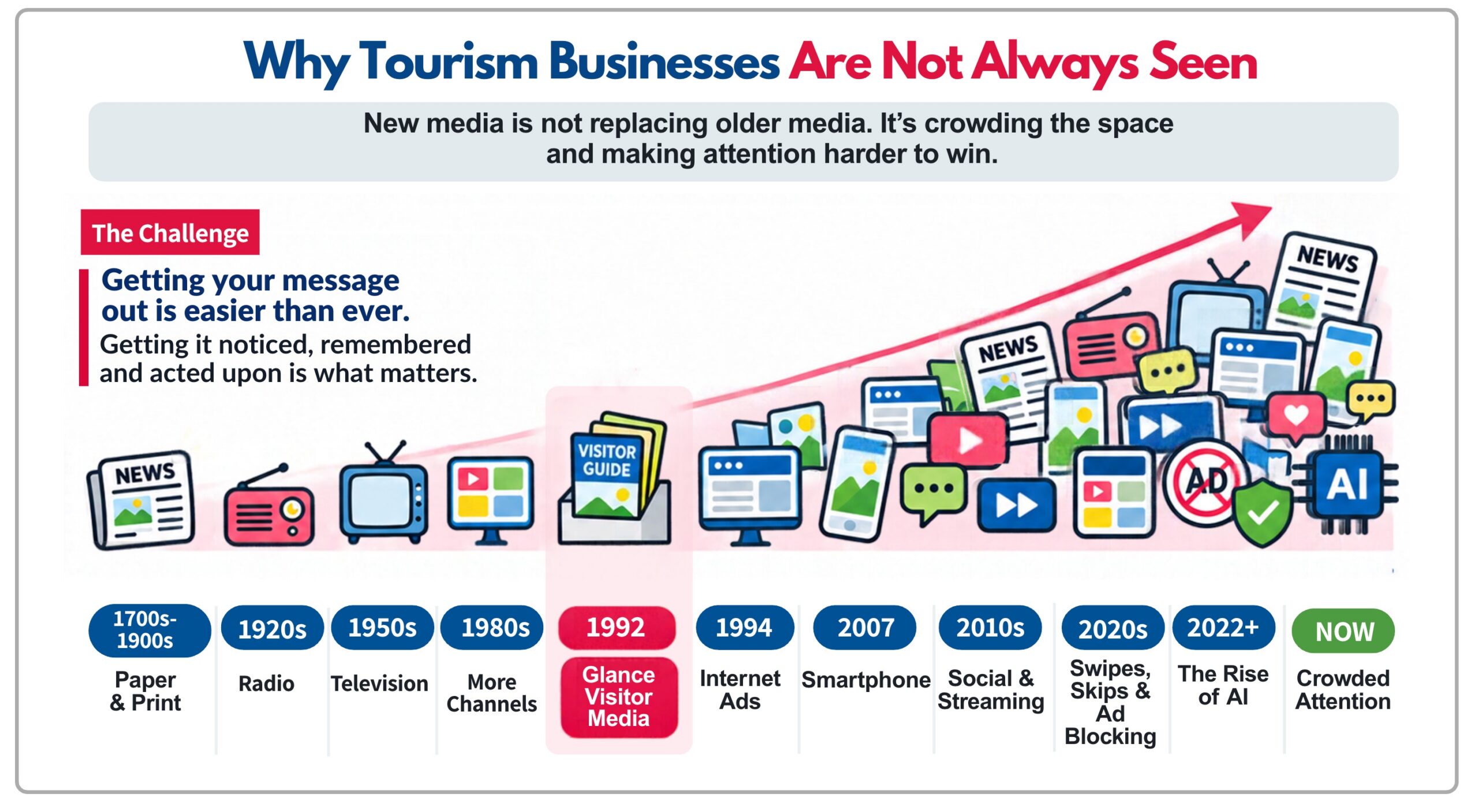
New media rarely eliminate everything that came before.
Radio didn’t kill newspapers. Television didn’t kill radio. And the internet didn’t eliminate either.
Instead, media accumulated.
Cable and satellite television multiplied viewing choices. The internet brought websites, search engines and online advertising. Smartphones put everything in people’s pockets.
Then came social media, streaming, messaging apps, podcasts and endless short-form videos.
When Glance Visitor Media began connecting tourism businesses with visitors in Ireland in 1992, the first web banner advertisement was still two years away.
Today, we’re all competing for attention across more channels than ever.
More channels haven’t created more human attention. They’ve divided it.
Advertising now competes with everything people choose to watch, read and share — from news and sport to family photographs and entertaining videos.
And consumers have more ways than ever to avoid unwanted messages.
A 2025 IAB Europe study across 12 European markets found that 80% of consumers preferred fewer, more relevant advertisements.
In the United States, Gartner research published in 2026 found that 81% of consumers surveyed tried to ignore or tune out advertising.
Ad-blocking is also widespread. Research by GWI, a global consumer research company operating in more than 50 markets, found that 30% of internet users worldwide use ad-blockers, including 26% in Ireland. Among those using ad-blockers, nearly two-thirds say there are simply too many advertisements.
And even advertisements that get through may go unnoticed.
Social media is a constantly moving stream of content. Posts and advertisements compete for a moment of attention before being swept aside by the next wave. Eye-tracking research by Lumen found that only one in three Facebook feed advertisements was actually looked at, and those that were seen attracted an average of just one second of attention.
Yet marketing reports can tell a more flattering story. Impressive figures for reach, impressions, views and hits may look reassuring, but they don’t necessarily mean people noticed, remembered or acted on the message. The numbers may be accurate, but the impression of success can be very misleading.
Being displayed isn’t the same as being seen. Being seen isn’t the same as being remembered. And being remembered isn’t necessarily being acted upon.

AI may help visitors discover great experiences. But for every business included in its answers, many others are left out — unseen and undiscovered.
AI is making marketing content faster, easier and cheaper to produce.
More articles, more images, more videos, more advertisements — all competing for the same attention.
Meanwhile, AI is changing how visitors discover places and experiences. Instead of browsing numerous websites, they can ask for recommendations and receive a convenient shortlist.
But what happens to the businesses that aren’t included?
This is particularly important in tourism. Visitors cannot search for something they don’t know exists.
As AI increasingly influences discovery, getting into the visitor’s consideration set becomes another marketing challenge.
In a world of increasing noise, perhaps the answer isn’t always to advertise more, but to reach the right people, in the right place, when they’re genuinely interested.
Consider the influence of a visitor brochure or guide.
It doesn’t interrupt a video or compete in a fast-moving social feed. It sits in a hotel, airport or visitor attraction until someone chooses to pick it up.
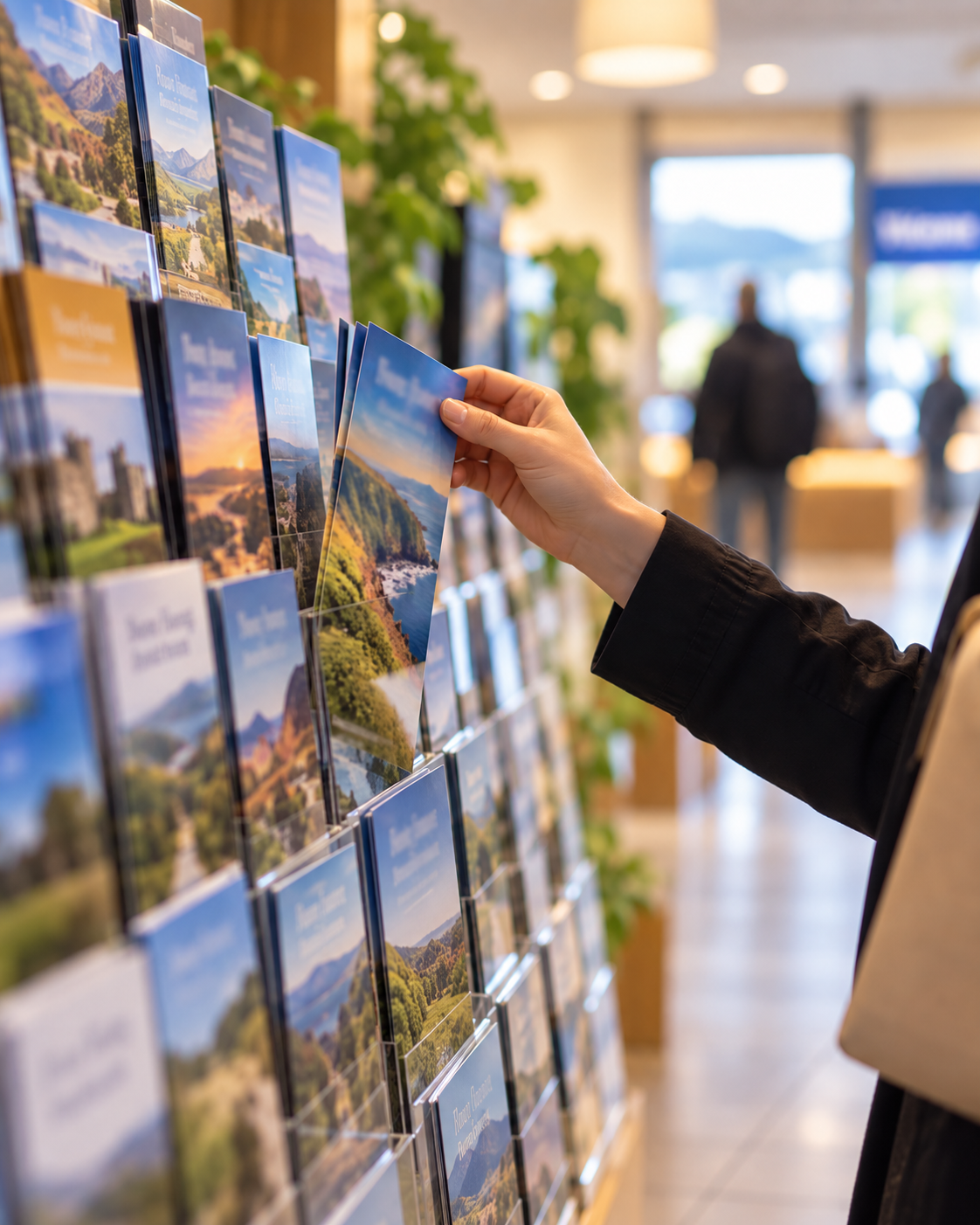
The act of selecting a brochure reflects genuine visitor interest — attention freely given, with greater potential to influence decisions, visits, bookings and purchases.
That simple act of choice reflects genuine interest.
Visitor International’s international research, involving more than 8,100 travellers, demonstrates the enduring value of printed visitor information. Among brochure users, 98% consider brochures trustworthy, while 87% keep brochures of interest during their trip or take them home.
Brochures also encourage visitors to go online, explore further and make bookings.
Print and digital work together, each playing to its strengths.
And while countless digital messages disappear in seconds, a brochure can remain with a visitor for days — because they chose to take it with them and choosing reflects interest and higher visit, book or buy conversions.
Digital marketing remains essential, and AI brings great possibilities. But more channels and more content don’t necessarily mean more effective marketing.
For tourism businesses, the challenge is increasingly about reaching visitors when they’re receptive, interested and ready to decide.
Because getting a marketing message out is easier than ever. Getting it noticed, remembered and acted upon is what really matters.
Discover how Glance Visitor Media can help you connect with visitors through brochures, maps, guides and more – when visitors are deciding. You can explore your options at the link below.

Watch out for them on your travels!